
Honda HR-V 2016 Manual: A Comprehensive Guide
This comprehensive guide details the 2016 Honda HR-V, offering access to the official owner’s manual in PDF format. It covers vehicle identification, safety, operation, and maintenance schedules, ensuring a thorough understanding of your vehicle.
The 2016 Honda HR-V represents a versatile and practical addition to the Honda lineup, blending compact dimensions with surprising interior space. This vehicle quickly gained popularity for its clever design, particularly the innovative “Magic Seat” system, offering exceptional cargo flexibility.
This manual serves as a vital resource for all 2016 HR-V owners, providing detailed information on vehicle operation, maintenance, and safety features. Whether you’re a first-time Honda owner or a seasoned enthusiast, understanding the contents of this guide will enhance your driving experience and ensure the longevity of your vehicle.

Accessing the official owner’s manual, available as a PDF from Honda’s website (honda.co.uk), is crucial. It’s designed to remain with the vehicle throughout its lifespan, offering a permanent record of important information. This guide aims to help you unlock the full potential of your 2016 HR-V.
Accessing the 2016 HR-V Owner’s Manual
Obtaining your 2016 Honda HR-V owner’s manual is straightforward. Honda provides digital versions for convenient access. A readily available PDF copy can be downloaded directly from the official Honda website (honda.co.uk/content/dam/local/uk/cars/owners/manuals/2016 HR-V Owners Manual.pdf). This ensures you always have the latest information at your fingertips.
Alternatively, a physical copy may have been included with your vehicle upon purchase. However, digital access offers advantages like searchability and portability. The manual is a substantial document (approximately 32 pages, 471 KB) containing comprehensive details about your HR-V.
Remember, the owner’s manual is considered a permanent part of the vehicle and should always remain with it, even during resale. Downloading the PDF ensures you have a backup and can easily refer to it whenever needed, maximizing your understanding and enjoyment of your 2016 HR-V.

Vehicle Identification and Key Information
Identifying your 2016 Honda HR-V requires locating the Vehicle Identification Number (VIN). This unique 17-character code is crucial for tracking the vehicle’s history, warranty claims, and recall information. The VIN is typically found on the driver’s side dashboard, visible through the windshield, and on your vehicle registration documents.
The owner’s manual emphasizes that it should remain with the vehicle upon resale, ensuring the new owner has access to vital information. Key details within the manual include engine specifications, dimension measurements, and a comprehensive overview of all vehicle systems.
Understanding your HR-V’s specific build and features relies on referencing this information. The manual also details the location of important labels and certifications. Properly documenting and understanding this key information is essential for maintenance, repairs, and overall vehicle ownership.
Safety Precautions and Warnings
The 2016 Honda HR-V owner’s manual dedicates significant sections to safety precautions and warnings, emphasizing the importance of responsible vehicle operation. These guidelines cover a wide range of potential hazards, from proper seatbelt usage and child restraint systems to airbag deployment information.
Critical warnings detail the risks associated with distracted driving, including mobile phone use and adjusting vehicle controls while in motion. The manual stresses the importance of maintaining a safe following distance and adhering to posted speed limits.
Furthermore, it provides detailed instructions regarding fluid handling, battery safety, and proper tire inflation. Always heed the warnings regarding fuel handling and potential fire hazards. Understanding and following these precautions is paramount for ensuring the safety of yourself, your passengers, and other road users.
Understanding the Instrument Panel
The 2016 Honda HR-V’s instrument panel provides crucial information regarding vehicle operation and status. The owner’s manual offers a detailed breakdown of each gauge, indicator light, and display. Key elements include the speedometer, tachometer, fuel gauge, and temperature gauge, all designed for at-a-glance monitoring.

Indicator lights alert the driver to various system conditions, such as low fuel, engine malfunctions, and brake system issues. The manual explains the meaning of each light, differentiating between warnings requiring immediate attention and those indicating normal operation.
The multi-information display (MID) provides access to trip data, average fuel economy, and other customizable settings. Familiarizing yourself with the instrument panel’s layout and functionality is essential for safe and informed driving. Understanding these features enhances your overall driving experience.
Operation of Lights and Signals
The 2016 Honda HR-V’s lighting system is comprehensively covered in the owner’s manual. Headlights, including low and high beams, are controlled via a dedicated switch, with automatic headlight functionality available on select trims. Proper headlight adjustment ensures optimal visibility and avoids blinding oncoming traffic.
Turn signals and hazard lights are essential for communicating your intentions to other drivers. The manual details their operation, including lane change indicators. Fog lights enhance visibility in adverse weather conditions, and their appropriate use is explained.
Interior lighting includes map lights, dome lights, and footwell lights, all contributing to passenger comfort and convenience. Understanding the various lighting controls and signal functions is crucial for safe and effective vehicle operation, as detailed within the provided documentation.
Starting and Stopping the Engine
The 2016 Honda HR-V’s engine starting procedure is straightforward, requiring a fully depressed clutch pedal (for manual transmissions) or a firm press of the brake pedal (for automatic transmissions) alongside turning the ignition key. The manual emphasizes pre-starting checks, like ensuring the parking brake is engaged.
Normal engine shutdown involves selecting Park (automatic) or Neutral (manual), applying the parking brake, and turning the ignition key to the “LOCK” position. Avoiding abrupt shutdowns is recommended to prolong engine life.
Emergency stopping procedures are also outlined, covering scenarios like engine failure or unexpected stalls. The manual details precautions to take and potential warning signs to watch for. Proper starting and stopping techniques, as described, contribute to vehicle longevity and safe operation.
Driving the 2016 Honda HR-V
The 2016 HR-V driving experience is detailed in the owner’s manual, covering essential aspects like steering, acceleration, and braking techniques. It stresses the importance of smooth, controlled maneuvers for optimal fuel efficiency and passenger comfort. The manual also addresses driving in various conditions, including wet or icy roads.
Regarding gear shifting (for manual transmissions), the guide provides recommendations for selecting the appropriate gear based on speed and engine load. It emphasizes avoiding harsh downshifts and utilizing engine braking when slowing down.
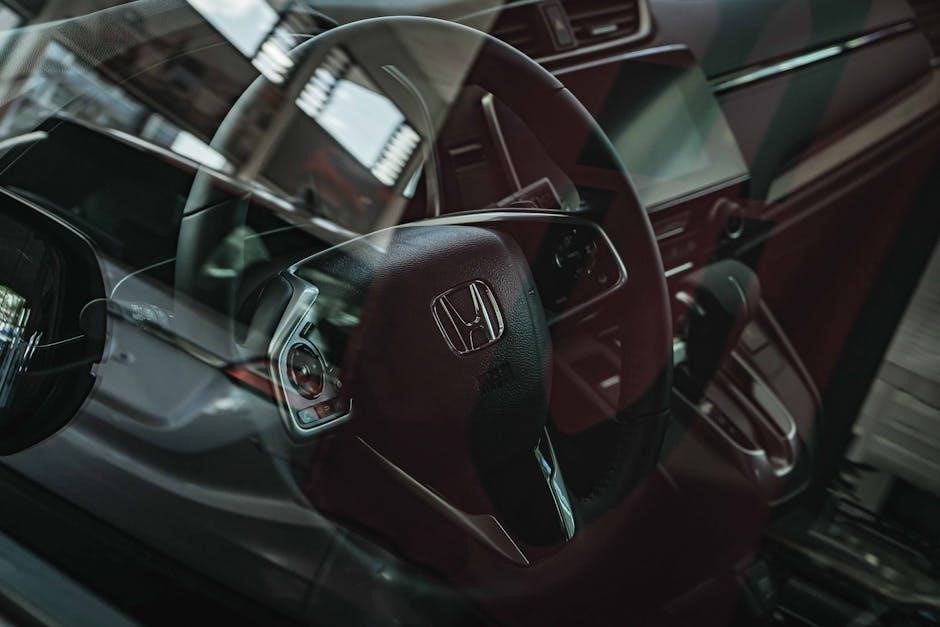
The manual also highlights the vehicle’s stability control system and its role in enhancing handling and preventing skids. Safe driving practices, adherence to traffic laws, and regular vehicle maintenance are consistently emphasized throughout the driving section.
Fueling and Fluid Checks
The 2016 Honda HR-V owner’s manual provides detailed instructions for safe and efficient fueling procedures; It specifies the recommended fuel type – unleaded gasoline – and cautions against using fuels with additives. The manual also details the location of the fuel filler door and proper operation.
Regular fluid checks are crucial for maintaining optimal vehicle performance. The guide outlines how to check engine oil, coolant, brake fluid, power steering fluid, and windshield washer fluid levels. It includes diagrams illustrating the location of each reservoir and dipstick.
The manual emphasizes the importance of using Honda-approved fluids and provides specifications for each. It also warns against overfilling or underfilling fluids, as this can lead to component damage. Proper disposal of used fluids is also addressed, promoting environmental responsibility.
Maintenance Schedule (2016 Model)
The 2016 Honda HR-V owner’s manual features a comprehensive maintenance schedule, crucial for preserving vehicle reliability and performance. This schedule is divided into two sections: ‘Maintenance Required’ and ‘Items to Inspect.’ It details services based on mileage intervals – typically every 5,000, 15,000, 30,000, and 60,000 miles.
Required maintenance includes oil and filter changes, tire rotations, air cleaner replacement, and fluid level checks. The manual specifies the type of oil and filter recommended by Honda. ‘Items to Inspect’ cover components like brakes, belts, hoses, lights, and exhaust systems, advising on their condition and potential replacement needs.
Following this schedule helps maintain warranty coverage and ensures the HR-V operates safely and efficiently. The manual also notes that severe driving conditions – such as frequent short trips or towing – may necessitate more frequent maintenance intervals.
Tire Information and Maintenance
The 2016 Honda HR-V owner’s manual provides detailed tire information, including the recommended tire size and pressure for optimal performance and safety. Correct tire pressure, found on the driver’s side doorjamb, is vital for fuel efficiency and even tire wear; The manual stresses the importance of checking tire pressure monthly and before long trips.
Regular tire maintenance includes visual inspections for damage, such as cuts or bulges, and ensuring adequate tread depth. The manual explains how to use a tread depth gauge and outlines the legal minimum tread depth. Tire rotation is also recommended, typically every 5,000 miles, to promote even wear and extend tire life.
The manual advises using tires of the same size and construction on each axle. It also details proper tire replacement procedures and the importance of professional installation to ensure correct balancing and alignment.
Understanding the Infotainment System
The 2016 Honda HR-V’s infotainment system, detailed in the owner’s manual, features a multi-angle rearview camera and a 5-inch color LCD screen on most trims. Higher trims boast a 7-inch touchscreen with Honda’s Display Audio system. The manual explains navigating the system’s menus, adjusting settings, and utilizing the various features.
Key functionalities include AM/FM radio, USB audio interface, and available HondaLink connectivity for smartphone integration. The manual provides step-by-step instructions for pairing devices via Bluetooth, accessing audio controls, and utilizing voice commands. It also covers customizing display settings like brightness and wallpaper.

Troubleshooting tips are included for common issues, such as Bluetooth pairing problems or unresponsive touchscreen functions. The manual emphasizes the importance of keeping the system software updated for optimal performance and access to the latest features.
Audio System Operation
The 2016 Honda HR-V’s audio system, as outlined in the owner’s manual, offers a range of features for an enjoyable driving experience. Operation varies slightly depending on whether your HR-V is equipped with the standard 4-speaker system or the upgraded 6-speaker setup; The manual details power on/off procedures, volume control, and source selection (AM/FM, USB, Aux).
Specific instructions cover tuning into radio stations, managing playlists from USB drives, and adjusting audio settings like bass, treble, and fader balance. The manual explains how to utilize the steering wheel-mounted audio controls for convenient operation while driving. It also details the function of any available tweeters.
Troubleshooting guidance is provided for common audio issues, such as distorted sound or inability to connect USB devices. The manual stresses the importance of using compatible audio formats and ensuring proper connections for optimal sound quality.
Bluetooth Connectivity Guide
The 2016 Honda HR-V’s infotainment system includes Bluetooth connectivity for hands-free calling and wireless audio streaming, detailed within the owner’s manual. The initial pairing process involves accessing the “Phone” menu on the touchscreen display and selecting “Add Device.” Ensure your smartphone’s Bluetooth is enabled and discoverable.
The manual provides step-by-step instructions for entering the PIN code (typically “0000” if prompted) and confirming the connection on both your HR-V and smartphone. Once paired, you can make and receive calls using the steering wheel controls or the touchscreen. Audio streaming from compatible apps is also supported.
Troubleshooting tips address common issues like failed pairing attempts or intermittent disconnections. The manual recommends deleting previously paired devices and restarting both the HR-V and smartphone if problems persist. It also clarifies limitations regarding simultaneous connections.

Navigation System Features
The 2016 Honda HR-V’s navigation system, if equipped, offers a range of features detailed in the owner’s manual. These include turn-by-turn directions displayed on the touchscreen, real-time traffic updates (depending on subscription status), and points of interest (POI) searching. The manual explains how to input destinations using address, intersection, or POI categories.
Users can customize settings such as route preferences (fastest, shortest, or avoiding tolls) and voice guidance volume. The system also supports map views, including 2D North Up and 3D Perspective. The manual clarifies how to utilize the system’s search functionality and manage saved locations.
Troubleshooting guidance addresses issues like inaccurate GPS signals or map display errors. It recommends ensuring a clear view of the sky for optimal GPS reception and checking for software updates to maintain system performance. The manual also details how to reset the navigation system if necessary.
Climate Control System
The 2016 Honda HR-V’s climate control system, as detailed in the owner’s manual, offers both manual and automatic temperature control depending on the trim level. The manual explains operation of the heating, ventilation, and air conditioning (HVAC) system, including adjusting fan speed, temperature settings, and airflow direction.
For automatic climate control, the manual clarifies how to set a desired temperature, allowing the system to automatically maintain it. It also describes the recirculation mode, which helps to quickly cool or heat the cabin and improve air quality. Understanding the controls for defrosting and demisting the windows is also covered.
Maintenance information includes instructions for replacing the cabin air filter, which is crucial for maintaining optimal air quality and system performance. The manual also provides troubleshooting tips for common issues, such as insufficient cooling or heating, and recommends consulting a Honda dealer for complex repairs.
Troubleshooting Common Issues
The 2016 Honda HR-V owner’s manual provides guidance on resolving frequently encountered problems. It details what steps to take if the engine fails to start, covering potential causes like a discharged battery or faulty starter. Information is included on addressing warning lights illuminated on the instrument panel, advising owners to consult the manual for specific meanings.
For issues with the infotainment system, the manual offers solutions for Bluetooth connectivity problems, audio malfunctions, and navigation system errors. It also addresses common concerns like tire pressure monitoring system (TPMS) alerts and unusual noises during driving.
The manual emphasizes that for more complex issues, or if a problem persists after attempting the suggested solutions, it’s crucial to contact a qualified Honda technician. It also provides contact information for Honda Roadside Assistance, offering support in emergency situations and facilitating vehicle towing if necessary.

Emergency Procedures
The 2016 Honda HR-V owner’s manual dedicates a section to crucial emergency procedures, prioritizing occupant safety. It details steps to take in the event of a collision, emphasizing the importance of remaining calm and assessing injuries. Instructions are provided for securing the vehicle, activating hazard lights, and contacting emergency services.
The manual outlines procedures for handling a flat tire, including safe jacking and tire changing techniques. It also covers what to do if the vehicle becomes disabled on the road, advising drivers to pull over to a safe location and utilize warning devices.
Specific guidance is given regarding actions to take during severe weather conditions, such as heavy rain, snow, or ice. The manual stresses the importance of knowing how to use safety features like the emergency brake and understanding the limitations of the vehicle in adverse conditions. It also includes information on jump-starting a dead battery safely.

Warranty Information

The 2016 Honda HR-V is covered by a comprehensive warranty, details of which are thoroughly outlined in the owner’s manual. This includes a bumper-to-bumper limited warranty, protecting against defects in materials and workmanship for a specified period. A separate powertrain warranty provides extended coverage for the engine, transmission, and other key components.
The manual clearly defines the terms and conditions of each warranty, including what is covered and what is not. It specifies the duration of coverage, mileage limitations, and any required maintenance procedures to keep the warranty valid. Information regarding emissions warranty coverage is also included, adhering to federal and state regulations.
Owners are advised to carefully review the warranty information and retain all service records as proof of maintenance. The manual provides contact information for Honda Customer Service, should owners have questions or need to file a warranty claim. Understanding the warranty ensures owners can maximize the benefits of their HR-V ownership.
Technical Specifications (Engine & Dimensions)
The 2016 Honda HR-V is equipped with a 1.8-liter inline-4 cylinder engine, producing 143 horsepower and 129 lb-ft of torque. This engine is paired with a Continuously Variable Transmission (CVT) for smooth and efficient operation. Fuel economy is estimated at 25 mpg city / 31 mpg highway (FWD models), varying slightly with AWD.
Regarding dimensions, the HR-V boasts a compact footprint with a length of 170.8 inches, a width of 66.1 inches, and a height of 63.8 inches. Its wheelbase measures 102.8 inches, contributing to a surprisingly spacious interior. Cargo volume is a notable feature, offering up to 58.8 cubic feet with the rear seats folded down.
The owner’s manual provides detailed specifications including curb weight (approximately 2847-3053 lbs), turning circle, and fluid capacities. These specifications are crucial for proper maintenance and understanding the vehicle’s capabilities.